

A useful fact to keep in mind
DAN notes that DCI symptoms usually appear within 15 minutes or up to 12 hours after surfacing, although severe symptoms can occur sooner.
Check the sourceWhat diving insurance may cover
Medical treatment, evacuation and policy limits
A useful policy starts with the event you are trying to protect against, not a reassuring product name. A dive accident policy may address treatment for a suspected decompression illness (DCI), hospital care, hyperbaric assessment, ambulance transport or evacuation. A general travel policy may include some medical benefits yet exclude scuba diving, or cover only recreational activity under a stated depth and certification condition. The word “medical” alone does not prove that a dive-related claim is included.
Read the definitions section first. Look for scuba diving, diving accident, decompression sickness (DCS), arterial gas embolism (AGE), hyperbaric treatment, emergency assistance and repatriation. Then check the benefit schedule for separate limits. A policy can cover treatment but impose a lower limit on evacuation, or cover an accident but not a planned training session. Ask whether the limit applies per person, per incident or for the whole period of insurance, and whether an excess is deducted before reimbursement.
DAN explains that DCI includes both DCS and AGE, and that a serious case requires prompt medical attention. Its guidance also says that symptoms can occur even when a diver followed accepted guidance. That is why “I followed the plan” is not an insurance test; the insurer will apply its wording, evidence requirements and exclusions. In an emergency, contact local emergency services and follow professional medical directions first. Do not delay care while trying to obtain a policy approval.
For a Hong Kong course, save the policy certificate, wording, emergency telephone number and claims instructions on your phone before entering the water. Keep the course confirmation and any receipt as well. If the policy requires pre-authorisation for a non-emergency hospital visit, ask how that interacts with urgent treatment. A responsible dive operator can explain what information to ask for, but only the insurer can confirm cover for your individual policy.
- Confirm treatment, chamber assessment, ambulance, evacuation and repatriation separately.
- Check monetary limits, excesses, geographical scope, claim deadlines and emergency contact rules.
- Keep your policy documents and dive-course records together; never rely on a screenshot of a sales summary alone.

Does scuba insurance cover decompression sickness?
Read exclusions for depth, certification and planned activities
The honest answer is “sometimes”. Some specialist dive policies expressly list decompression illness and emergency evacuation. Other policies exclude it, cover it only as a consequence of an accidental injury, or require the diver to follow certification, depth and supervision rules. Even a specialist policy can exclude technical, professional, competitive or unusually deep diving unless it has been declared and accepted. Never infer cover from a policy’s marketing headline.
Compare the activity description with your actual plan. A beginner’s confined-water lesson, an open-water certification dive, a guided recreational boat dive and an independent deep dive can be treated differently. Ask whether a student is covered while practising skills, travelling to the site, or completing an instructor-led assessment. If your certification is pending, ask whether “qualified diver” wording creates a gap during training. Get the reply in writing and keep the name of the insurer or authorised representative who answered.
Depth and equipment exclusions deserve careful reading. A policy might state a maximum depth, require a recognised certification for that depth, or exclude dives made outside a planned recreational profile. It may also ask about nitrox, rebreathers, wreck penetration, caves, solo diving or professional activity. A claim can be affected by a breach of a safety condition, so do not choose an activity first and hope insurance will follow. Choose a realistic activity, disclose it accurately, and ask for an endorsement when needed.
DCS warning signs can include unusual fatigue, joint pain, tingling, weakness, dizziness, breathing difficulty or a rash after diving. They can be subtle, and symptoms may appear later. DAN notes that DCI symptoms usually appear within 15 minutes or up to 12 hours after surfacing, although severe symptoms can occur sooner. This article is not a diagnosis or a treatment protocol. If you suspect a dive injury, alert the dive team, contact local emergency services and obtain medical evaluation promptly. Insurance questions come after immediate safety and professional care, not instead of them.
If you are comparing does travel insurance cover decompression sickness, remember that the answer depends on that travel policy’s exact exclusions and activity limits. A policy that pays for ordinary illness during a holiday may still exclude a diving incident. Read both the activity clause and the medical-benefit clause together.

Scuba diving course insurance Hong Kong: choosing cover
Questions to ask before your course or dive
For scuba diving course insurance Hong Kong students should ask for a clear answer before paying a deposit. Start with the course format, dates, locations and certification system, then describe whether you will be in a pool, shore site or boat. Ask: “Are training dives covered as diving activity, including a suspected decompression illness?” Next ask whether emergency assessment, transport to hospital, hyperbaric treatment and evacuation are included, and whether the insurer pays directly or reimburses you.
Tell the insurer about the level you are taking rather than using a broad phrase such as “holiday diving”. A policy may treat a novice differently from an already-certified diver, and a course may have a depth or supervision condition. Ask what happens if weather changes the session, if a practical assessment is repeated, or if a doctor advises you not to dive. Do not assume a replacement date or refund is an insurance benefit; those are usually governed by the course’s written booking terms.
You can also read do I need scuba diving insurance in Hong Kong for a broader decision framework. The practical question is not whether every diver must buy one particular product. It is whether your existing cover leaves a sensible gap for the activity you intend to do, and whether you can afford the possible uninsured costs of urgent treatment or evacuation. If the wording remains unclear, select another policy or postpone the dive until you have a written answer.
- Describe the exact course, depth range, supervision, breathing gas and locations.
- Request written confirmation that training dives and suspected DCI are included.
- Ask who arranges emergency transport and whether the insurer must authorise it.

A practical insurance comparison before booking
Match the policy to the way you will dive
The table below is a screening tool, not a promise that any category is insured. Read the actual wording and ask the provider to confirm the points that matter to you. A cheap premium can be poor value if the activity is excluded or the evacuation limit is too low for the destination. Conversely, a broad policy may contain a high excess or strict claim procedure.
When comparing dive accident insurance versus travel insurance, compare like with like: medical limits, DCI language, training cover, depth, certification, emergency assistance and exclusions. Also check whether the policy is valid in Hong Kong waters and during travel between sites. The provider’s jurisdiction and claims process can matter when you are trying to arrange urgent help overseas.
- Use the policy wording and certificate, not a social-media summary or verbal assumption.
- Record unanswered questions and obtain confirmation before the cancellation or start date.

Safety, health and claims boundaries
Insurance cannot make an unsafe dive acceptable
Insurance is financial risk transfer, not permission to ignore training, weather, equipment checks, buddy procedures or medical advice. Tell the instructor about relevant health concerns privately and honestly. If you are considering can you scuba dive while pregnant in Hong Kong, seek advice from a qualified healthcare professional; a policy cannot decide whether diving is medically appropriate. Do not use a policy’s existence as evidence that a dive is safe for you.
Likewise, how long after drinking alcohol can you scuba dive is a fitness and safety question, not merely an insurance question. Do not dive when impaired, unwell, congested or unable to follow the briefing. If an incident occurs, give clinicians an accurate account of your dives, symptoms, medications and timeline. Preserve dive-computer information, witness details and receipts where safe to do so, because the claims team may need them.
If an insurer declines a claim, ask for the specific clause and the appeal process in writing. Do not edit records or omit an activity to make a claim appear to fit. DiveHarbour can help you formulate questions for a course provider, but cannot interpret a contract as your insurer, decide liability or guarantee reimbursement. For a suspected emergency, local medical services and trained professionals take priority over any claim conversation.
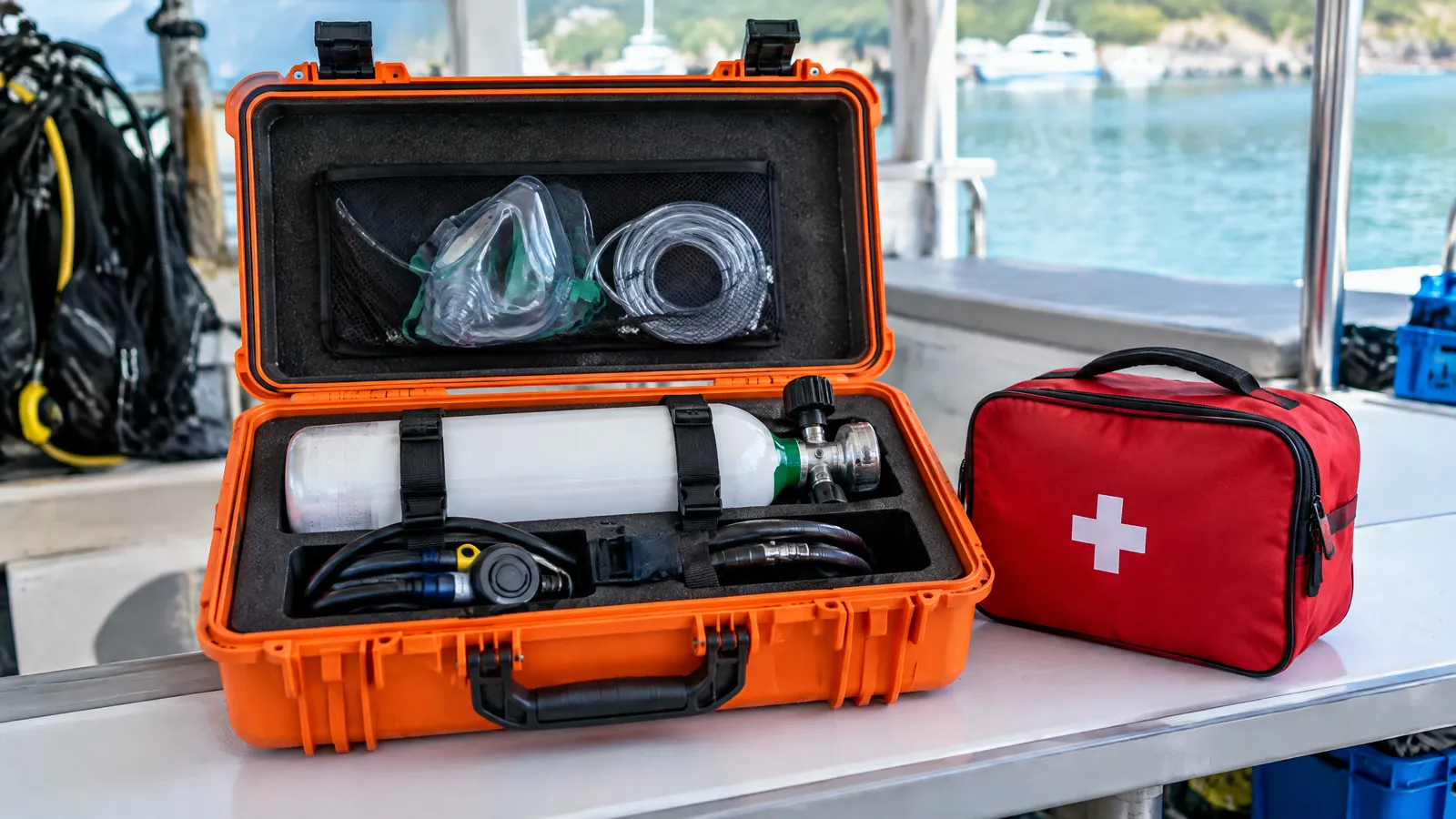
A simple checklist for your Hong Kong course
Get a written answer before you enter the water
Work through these three checks: activity, emergency and evidence. First, write down the course or dive you will actually do, including whether it is training, its expected depth, supervision and equipment. Second, ask the insurer to confirm DCI treatment, emergency transport and evacuation, plus every relevant limit and exclusion. Third, save the policy, emergency number, booking confirmation and contact details, and tell your buddy where they are. This small preparation makes an uncertain policy easier to assess.
A course provider can explain the planned learning environment and normal safety arrangements. The insurer must answer whether your policy covers that activity. If you cannot obtain a clear answer, do not treat silence as approval. You may decide to buy specialist dive cover, rely on an existing policy only after written confirmation, change the activity, or delay the booking. Any make-up session is available only where the written terms permit it; no replacement date is guaranteed. The best choice is the one that matches your experience, health, budget and realistic plan rather than the one with the most attractive headline.
For a final review, bring your questions to DiveHarbour before booking and ask what information you should send to the insurer. We can help you identify the wording to query, while the insurer remains responsible for explaining the contract. That boundary protects you from a confident but inaccurate promise and gives you a better basis for choosing your Hong Kong scuba course.
- Activity: course type, depth, certification status, supervision and special equipment.
- Emergency: DCI, hospital, chamber assessment, ambulance, evacuation and authorisation.
- Evidence: policy wording, certificate, emergency contacts, booking records and dive history.

Which cover questions fit your planned dive?
| Policy situation | Ask about | Common gap to check |
|---|---|---|
| Beginner course | Training dives, DCI, hospital and evacuation | Pending certification or training exclusion |
| Certified recreational trip | Depth, location, buddy and emergency limits | Depth, remote-site or non-declared activity exclusion |
| Specialist or technical activity | Named equipment, depth and written endorsement | Technical, professional or penetration-diving exclusion |
Scuba insurance and decompression sickness: what to check — common questions
Does ordinary travel insurance cover decompression sickness?Toggle answer
Not necessarily. Some travel policies exclude scuba diving, decompression illness or treatment arising from conditions outside their stated limits. Check the wording for diving depth, certification, training, emergency treatment and evacuation, then ask the insurer for written clarification before you dive.
What should I ask about scuba diving course insurance Hong Kong?Toggle answer
Ask whether the policy covers course and training dives, decompression illness, emergency medical care and evacuation in Hong Kong, and what exclusions or limits apply. Confirm the answer with the insurer; DiveHarbour cannot decide whether a policy covers your individual circumstances.
Are insurance premiums or course fees refundable if I cannot dive?Toggle answer
Do not assume so. Insurance premiums and course fees are generally non-refundable unless the insurer or written booking terms specifically say otherwise. Read the cancellation, cooling-off and postponement clauses before paying, and ask who makes the decision.
Can I automatically make up a missed training session?Toggle answer
Only where the written course terms permit it. A make-up session, replacement date or reschedule is not guaranteed by insurance and may depend on availability, weather, medical advice and the provider’s stated conditions. Ask for those terms before booking.
What should I do if I feel unwell after a dive?Toggle answer
Treat possible dive illness as a medical matter: alert the dive team, contact local emergency services and obtain professional evaluation promptly. Do not wait for an insurer to approve care, and do not rely on this page for diagnosis or treatment instructions.
Take the question with you
Before your Hong Kong scuba course, write down the exact activity and ask the insurer—in writing—whether it covers training dives, decompression illness, emergency treatment and evacuation under your depth and certification conditions. Keep the answer with your booking records, follow the instructor’s safety plan and seek urgent medical help for symptoms. If the wording is unclear, pause and ask more questions rather than treating uncertainty as cover.
Sources worth checking
- Divers Alert Network: Decompression Illness
DAN states that decompression illness includes decompression sickness and arterial gas embolism; serious cases require rapid medical evaluation and evacuation, and symptoms can occur even after following accepted guidance.
- Divers Alert Network: Dive Accident Insurance
DAN presents dive accident insurance as a distinct product category with emergency-assistance and coverage terms that must be checked against the policy.
Useful next reads for your plan
If you are still comparing routes, these related pages give you practical questions to bring into your next conversation with an instructor.
Put your plan into practice
Useful planning guides
Dive Insurance Claim Checklist for Hong Kong Divers
Use this dive insurance claim checklist worksheet to compare practical options, check key decision points, and confirm current details with DiveHarbour.
dive insurance claim checklist
