
SAFE LEARNING · HAPPY EXPLORING
DiveHarbour

DiveHarbour · Practical guide

Shore-event styling brief: explain the look before booking

A good shore-event styling brief starts before the salon enquiry. Say whether your hair is wet from the sea or pool, what rinse and drying tools you have, what you will wear, and how your hair should arrive. Then describe the event finish, accessories, and any recent colour or chemical service. This gives the stylist useful context without promising a time, price, or same-day appointment.

By DiveHarbour8 min read
Ask about diving courses or coastal trip planning Read the guide
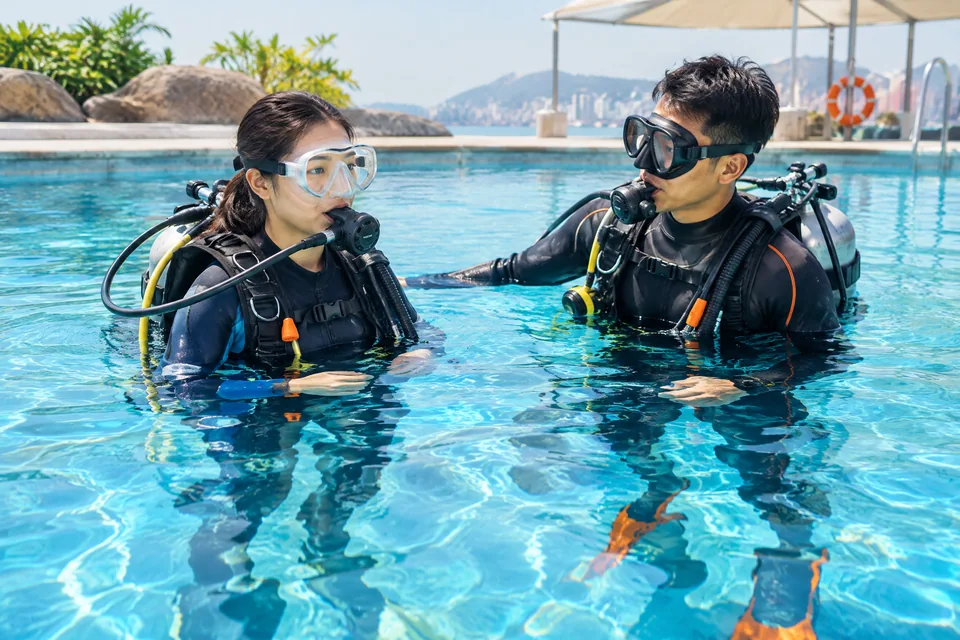
Illustration of a shore-event styling brief with hair prepared before leaving the coast
Illustration · preparing a hair and event brief before leaving the shore.

Instructor qualifications

One clear teaching conversation from first breath to next step

DiveHarbour brings together scuba teaching, swimming, lifesaving and water-rescue experience so you can ask practical questions before choosing a course.

  • PADI teaching backgroundTeaching experience across recognised scuba learning pathways.
  • SSI teaching backgroundClear explanations when you are comparing agency routes.
  • NAUI teaching backgroundA practical, standards-aware approach to learning and progression.
  • Swimming foundationWater confidence and calm, step-by-step practice matter.
  • Lifesaving experienceSurface awareness and prevention stay part of the conversation.
  • Pool rescue experienceControlled practice can build confidence before open water.
  • Beach rescue experienceLocal water context informs sensible preparation.
  • Kayak rescue experienceA wider water-safety perspective supports good judgement.
  • PWC rescue experienceAsk about the right learning route for your experience and goals.

Brand relationship: DiveHarbour and Vit So share the same owner.

This guide is organised by DiveHarbour. The Vit So links provide external hair-service information for reference; they are not independent certification, medical advice, diving-safety advice, or a guarantee of service results or availability.

A useful fact to keep in mind

The American Academy of Dermatology recommends rinsing hair immediately after swimming, then washing and conditioning as part of its swimmer hair-care guidance.

Check the source
Key takeaways

Four points to carry forward

  • Rinse hair with fresh water promptly after swimming, then explain whether it is damp, partly dry, or fully dry.
  • Pack a towel, gentle comb, clips, and suitable clothing so the transition from water to styling is predictable.
  • Describe the venue, neckline, movement, accessories, and desired hold instead of sending only a style name.
  • Ask directly about preparation, service scope, availability, and any recent colour, bleach, perm, or straightening work.
Start here

Start with a clear shore-event styling brief

Your shore-event styling brief should describe the water, wetness, and event

If you are leaving a beach or pool for a gathering, the most useful first message is not simply a style name. It is a short condition report. Say when you expect to leave the water, whether the water was salt or chlorinated, and whether you can reach a fresh-water shower. Then describe your hair length, texture, density, and current state. “Wet at the roots” needs a different conversation from “rinsed, towel-blotted, and almost dry.”

Keep the activity plan and the styling enquiry as two separate decisions. DiveHarbour’s Hong Kong shore diving information can help you understand a shore activity, but it does not replace an event-styling consultation. In your styling message, focus on the transition after the water: where you will change, what you can carry, and the condition in which you will arrive. This avoids asking a stylist to infer your schedule or make a promise about a rushed appointment.

  • Name the water setting: beach, sea swim, hotel pool, public pool, or another setting.
  • State the hair condition you expect at arrival: dripping, damp, towel-blotted, partly dry, or dry.
  • Give the event type, start time, venue setting, and whether you will wear a hat or head covering first.
A useful opening sentence is: “I will come from the water and need a formal look, so I would like to confirm the best preparation and arrival condition.”
Guide · 02

Rinse first, then describe how dry your hair is

Fresh water and gentle drying make the preparation question clearer

The American Academy of Dermatology advises rinsing hair immediately after swimming. It also describes washing with a swimmers’ shampoo and following with a deep conditioner as part of a post-swim routine. [1] Treat that as general hair-care guidance, not as a universal rule for when a service can begin. A fresh-water rinse is a sensible first step, but the right preparation still depends on your hair, the requested service, and the provider’s instructions.

When you ask about hair styling, report what you actually did rather than saying only “I washed it.” For example, explain whether you rinsed, shampooed, conditioned, wrapped your hair in a towel, used a dryer, or left it to air dry. If you cannot complete the full routine, say so. The important point is accurate information, not trying to make your hair sound more prepared than it is.

  • Rinse with fresh water as soon as practical after leaving the water, especially before putting on event clothes.
  • Blot or wrap the hair instead of rubbing it hard with a towel; use a wide-tooth comb gently when appropriate.
  • If you use a blow dryer, say whether you used low heat, a diffuser, or no heat at all.

Swipe the table to compare all columns.

Arrival-condition checklist for a water-to-styling enquiry
Arrival conditionWhat to reportUseful question
Hair still drippingNo rinse or only a brief rinse; roots and lengths are very wetWhat should I do before arriving, and should I bring a dryer?
Damp after towel blottingFresh-water rinse completed; hair is wrapped or blottedIs this arrival condition suitable for the requested finish?
Partly dryState which areas remain damp and what tool was usedShould I leave it as it is or dry it further?
Dry and changedExplain the rinse, wash, conditioner, and drying stepsAre there any product or accessory instructions before the service?
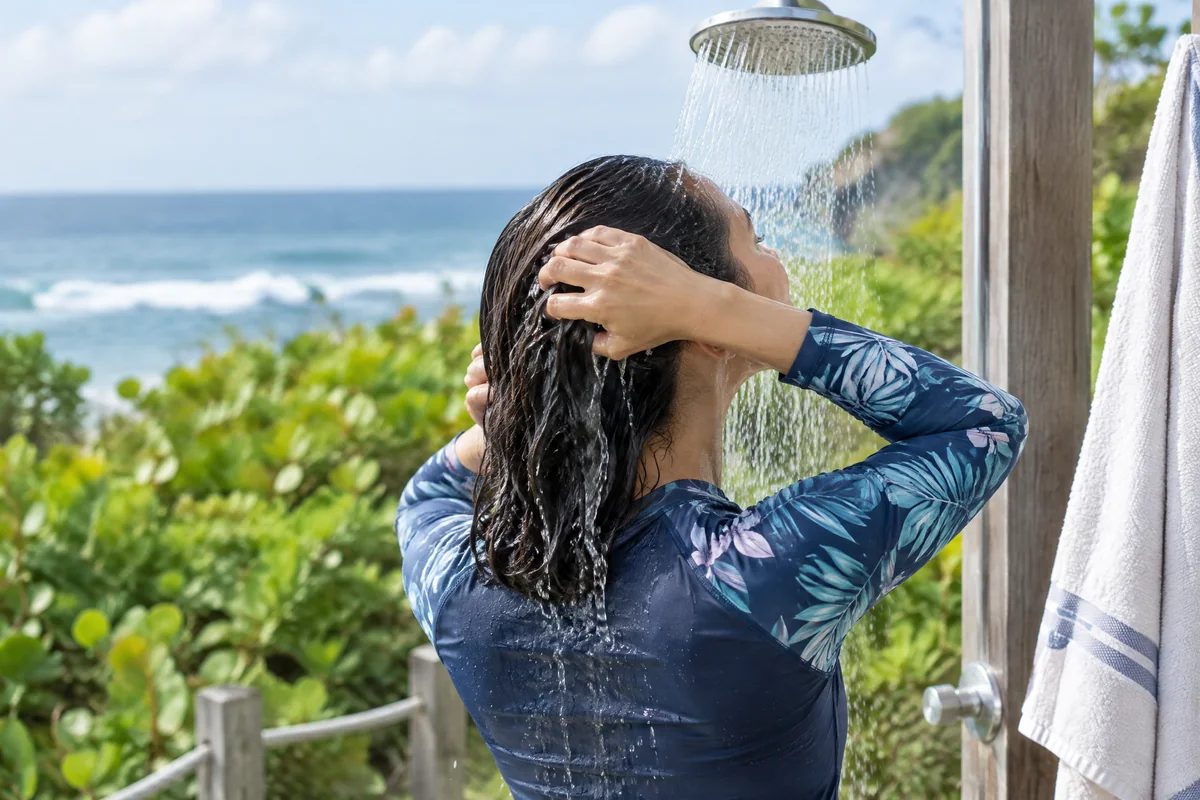
Illustration of the rinse step in a shore-event styling brief after swimming
Illustration · a fresh-water rinse is one practical post-swim step.
Guide · 03

Pack for the gap between water and the venue

A practical kit protects the look you are asking someone to create

Your kit should cover three jobs: removing water, controlling the hair without pulling, and changing into clothing that will not disturb the finished look. A clean towel or wrap, fresh water access, a gentle comb, clips, and a small bag for wet items are usually more useful than a large collection of styling products. If you have a product that you already know suits your hair, list it in the enquiry and ask whether to bring it. Do not assume that a product is suitable for every service.

Clothing is part of the brief because a narrow neck opening can disturb hair that has already been shaped. Pack the shirt, dress, or jacket you intend to wear, and ask whether it should be put on before or after styling. If the event is outdoors, mention wind, humidity, rain exposure, and whether you need to keep a hat on during travel. These details help the conversation stay practical without turning a general guide into a promise about how long a look will last.

  • Bring a towel or wrap, a bag for wet swimwear, and a comb or brush that you already use safely.
  • Pack the event outfit or choose a loose, easy-to-remove layer for the journey to styling.
  • Note whether you need to carry a hat, veil, clips, hair ties, or another accessory after the look is finished.
  • Keep a photo of your natural hair and a photo of the outfit together so the request is easy to review.
Guide · 04

Turn a mood board into event hair styling

Describe the finish, movement, and outfit before you ask for event hair styling

A style label such as “updo” or “waves” leaves several decisions open. Explain where you want volume, whether the face should stay open, how much movement you want, and whether you prefer a polished or relaxed finish. Add the neckline, collar, jewellery, and the part of the outfit you want people to notice. If the event involves outdoor travel, say whether wind or a hat will affect the first part of the day. The goal is a shared description, not a guarantee that a reference image will look identical on you.

If the water activity is part of a larger day, keep its timing in the appropriate planning note. For example, best time to dive in Hong Kong is a separate DiveHarbour guide. Your styling enquiry should then state the resulting arrival condition and the time you can realistically reach the service. When checking event hair styling, ask what information the provider needs before confirming the service, rather than assuming the event label answers every question.

  • Describe the finish with three words, such as smooth, soft, and secure, or textured, loose, and natural.
  • Share the outfit neckline, jewellery, hair accessories, and any areas you want to keep visible.
  • Say how much movement is acceptable and whether you need the style to work with a hat or changing layer.
  • Send reference images for direction, then ask what needs to be adjusted for your own hair and arrival condition.
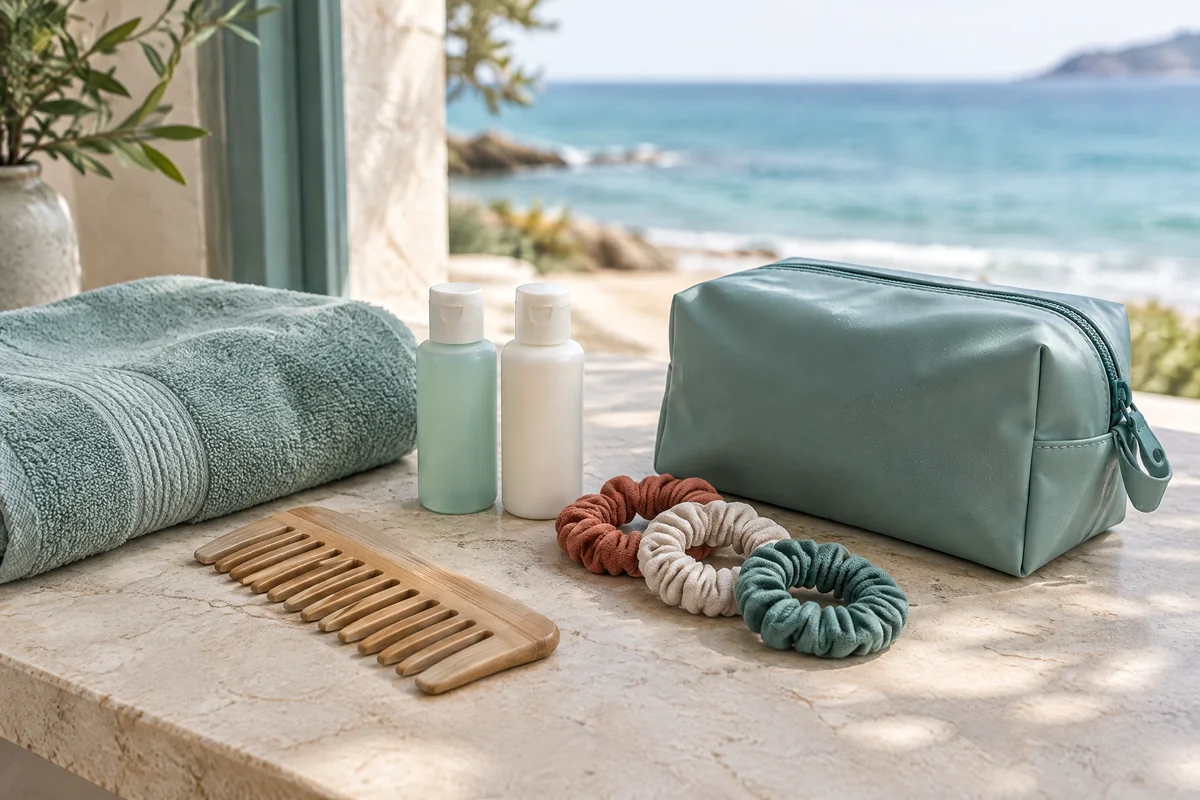
Illustration of a care kit for a shore-event styling brief between swimming and an event
Illustration · a small kit for water removal, gentle control, and changing clothes.
Guide · 05

Give bridal hair a fuller arrival brief

Bridal hair planning needs accessories, clothing, and water exposure in one message

A bridal request deserves more detail because the hairstyle may need to work with a veil, comb, flowers, jewellery, a neckline, and a photographed schedule. If you have been swimming beforehand, say so plainly. Include the time you expect to finish rinsing, the drying tools available, and whether you will arrive in the final outfit or a loose layer. Do not promise that a wet-to-bridal transition is possible in a particular interval. Ask what preparation and arrival condition the provider requires.

When you review bridal hair, treat the page as a starting point for a direct service question. Ask whether your accessories should be brought, how they should be fitted, and whether a consultation or trial is part of the arrangement. Also mention recent colour, bleach, perm, or straightening work. Those details may affect the discussion, and any assessment should be made for your own hair rather than inferred from a generic bridal image.

  • List every item that must sit in the hair, including a veil, comb, pins, flowers, or headpiece.
  • Describe the dress neckline and when the final outfit will be put on.
  • State your rinse, wash, conditioning, and drying steps after the water activity.
  • Ask directly about consultation, trial, preparation, service scope, and availability instead of assuming they are included.

Swipe the table to compare all columns.

Questions that turn a style idea into a checkable request
TopicDetails to shareQuestion to ask
FinishSmooth, textured, pinned, loose, or movement-focusedWhich finish fits my hair and the event setting?
ClothingNeckline, collar, jacket, veil, or outfit changeShould I arrive in the final outfit or a loose layer?
AccessoriesHeadpiece, flowers, comb, pins, or jewelleryShould I bring the items, and how will they be fitted?
Hair historyRecent colour, bleach, perm, straightening, or noneIs there preparation you want me to follow before the service?
For a wedding, “bridal” describes the occasion, not a promise that every requested accessory or finish is available. Confirm the details directly.
Guide · 06

Send one practical message before you book

A short shore-event styling brief makes the reply easier to use

Before you send an enquiry, put the facts in the order the provider needs to read them: water exposure, rinse and drying, hair history, event setting, desired finish, clothing, accessories, and questions. A message with this order can be copied into a booking form or chat without adding assumptions. It also gives you a record of what you asked. If the answer changes after you learn the service scope or availability, update the message rather than relying on a vague verbal plan.

Use a calm, specific request: “I will swim before an evening gathering. I can rinse with fresh water and towel-blot, but I may not have a full dryer. My hair is [length and texture], and I recently had [service or none]. I will wear [outfit] and want [finish]. Could you confirm the preparation, accessories, arrival condition, service scope, and available options?” This is a request for information. It is not a same-day promise, a price quote, or a result guarantee.

  • Paste your water, rinse, drying, outfit, hair-history, and finish details into one message.
  • Ask which preparation is preferred and what to do if your hair is still damp at arrival.
  • Ask about service scope, accessories, consultation or trial arrangements, and available appointment options.
  • Save the reply and update it if the venue, outfit, water activity, or arrival condition changes.
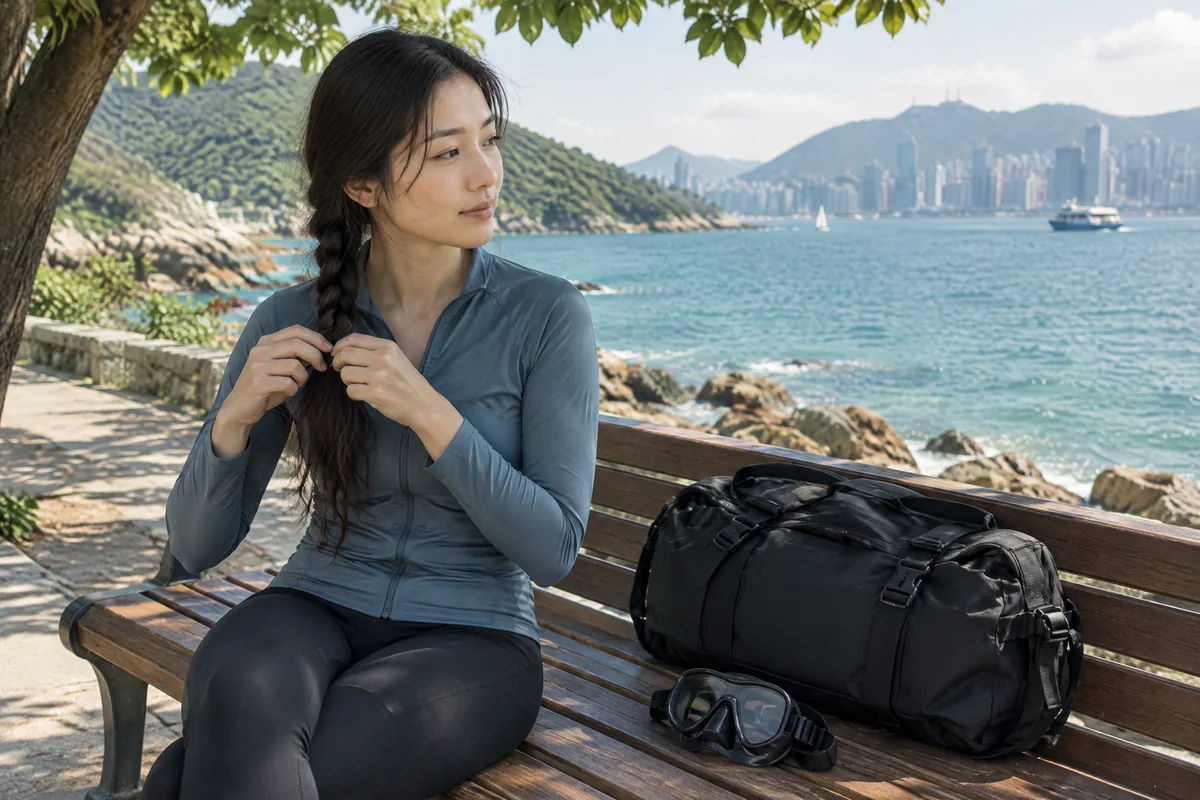
Illustration of shore-side event hair planning from a shore-event styling brief
Illustration · translating the event setting and outfit into a styling request.
A sensible next step

Take the question with you

Write the enquiry before the water activity, then update it after you rinse and dry. The strongest brief gives the provider a truthful arrival condition, a clear event finish, the clothing and accessories involved, and a short list of questions about preparation and service scope.

Questions to ask

Common questions

Should I arrive with wet hair after swimming?

Ask the provider what arrival condition they prefer. Rinse with fresh water as soon as practical, towel-blot gently, and report whether your hair is dripping, damp, partly dry, or dry. Do not assume one universal waiting period or preparation rule.

Can I request a formal style after a beach or pool activity?

You can ask, but describe the water exposure, rinse, drying tools, outfit, and event timing first. The provider can then explain the preparation, service scope, and available options for your own hair. This article does not promise same-day availability.

What should I bring for an event or bridal enquiry?

Bring relevant outfit details, reference images, and any veil, comb, flowers, pins, or headpiece. Also bring or describe the tools and products available after swimming. Ask whether accessories should be supplied in advance and whether a consultation or trial is available.

Does a rinse remove the need to explain my hair history?

No. A rinse describes one preparation step. Also state recent colour, bleach, perm, straightening, texture, and the finish you want. This helps the provider decide what to ask next without treating general post-swim guidance as an individual assessment.

Further reading

Official sources worth checking

  • [1] Must-try summer hair care

    The American Academy of Dermatology advises rinsing hair immediately after swimming and then washing and conditioning as part of its swimmer hair-care guidance.

  • [2] Sun protection using hats

    ARPANSA says broad-brimmed hats and wide-brimmed bucket hats can shade the head, ears, face, and neck, but hats rarely provide sufficient protection on their own when sun protection is advised.

Continue exploring

Keep comparing practical questions before you choose a course, activity or preparation step.

Coastal life and hair care · Updated 2026-11-06

Post-swim family hair routine: wash, trim and dry with ease

Plan a post-swim family hair routine with rinse, wash, trim and drying choices. Compare salon questions and check the next step.

post-swim family hair routine
Coastal life and hair care · Updated 2026-11-06

Coastal wavy haircut upkeep: keep shape after swims

Plan coastal wavy haircut upkeep around wet movement, retained length and your swim-day routine. Read the checklist before booking.

coastal wavy haircut upkeep

Coastal life and hair care · Updated 2026-11-06

Coastal men's undercut shape guide: compare wet styling

Read the coastal men's undercut shape guide: compare wet outline, side length and curl behaviour, then plan your coastal cut.

coastal men's undercut shape guide
Your next step

Ask about diving courses or coastal trip planning

Message DiveHarbour on WhatsApp to discuss diving courses or coastal trip planning, along with your experience and preferred dates.

Ask about diving courses or coastal trip planning
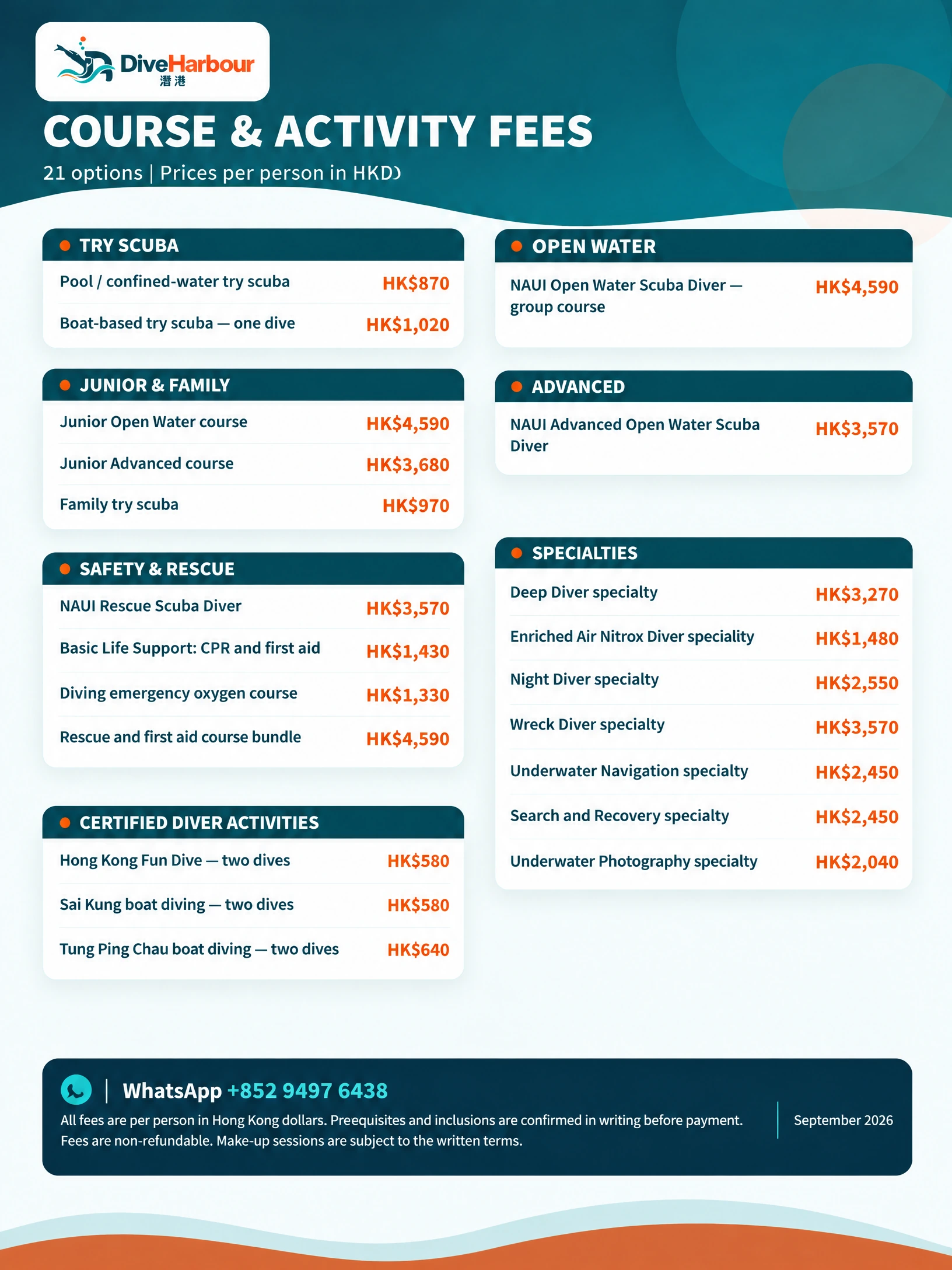
English price list for 21 DiveHarbour courses and activities, with fees per person in Hong Kong dollars
Tap the price list to view it at full size.

Plan your next dive

Course fees, clearly set out

Compare our published course and activity fees before choosing your next step. All prices are per person in Hong Kong dollars.

Before you book, we confirm prerequisites, materials, certification, equipment, venue and boat arrangements in writing. Ask us about fees for courses not listed here.

All fees are non-refundable. Make-up sessions are subject to the written terms.

Read all course fees
DiveHarbour course and activity fees per person in Hong Kong dollars
Course / activityPer person
Pool / confined-water try scubaHK$870
Boat-based try scuba — one diveHK$1,020
NAUI Open Water Scuba Diver — group courseHK$4,590
Junior Open Water courseHK$4,590
Junior Advanced courseHK$3,680
Family try scubaHK$970
NAUI Advanced Open Water Scuba DiverHK$3,570
NAUI Rescue Scuba DiverHK$3,570
Basic Life Support: CPR and first aidHK$1,430
Diving emergency oxygen courseHK$1,330
Rescue and first aid course bundleHK$4,590
Deep Diver specialtyHK$3,270
Enriched Air Nitrox Diver specialtyHK$1,480
Night Diver specialtyHK$2,550
Wreck Diver specialtyHK$3,570
Underwater Navigation specialtyHK$2,450
Search and Recovery specialtyHK$2,450
Underwater Photography specialtyHK$2,040
Hong Kong Fun Dive — two divesHK$580
Sai Kung boat diving — two divesHK$580
Tung Ping Chau boat diving — two divesHK$640