
SAFE LEARNING · HAPPY EXPLORING
DiveHarbour

DiveHarbour · Practical guide

Coastal wavy haircut upkeep: keep shape after swims

The most reliable coastal wavy haircut upkeep plan starts with what your hair does when wet, how much length you want to keep, and how long you can style after a swim. Compare wolf layers, medium length and natural-wave cuts by movement and effort. Rinse after swimming, then explain your real routine before choosing a shape.

By DiveHarbour8 min read
Ask about diving courses or coastal trip planning Read the guide
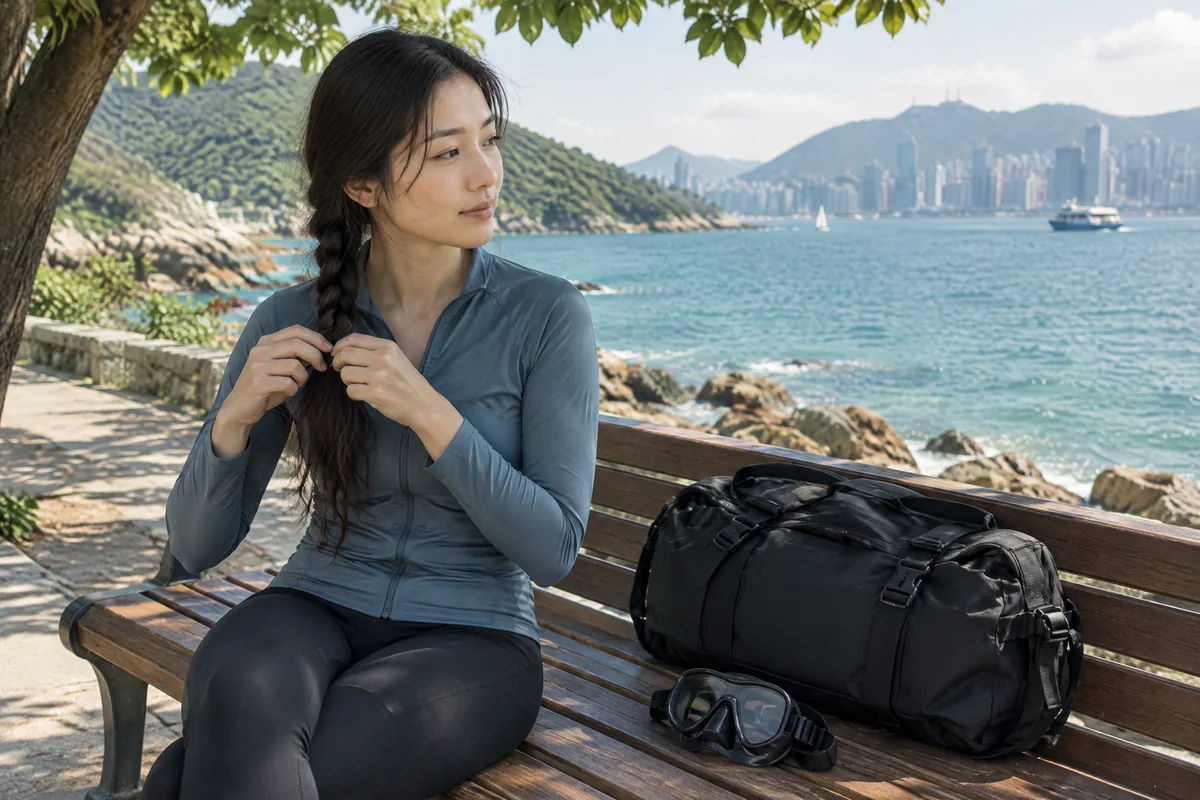
Illustration of coastal wavy haircut upkeep preparation before a swim
Illustration · preparing wavy hair and a small post-swim kit before a coastal activity.

Instructor qualifications

One clear teaching conversation from first breath to next step

DiveHarbour brings together scuba teaching, swimming, lifesaving and water-rescue experience so you can ask practical questions before choosing a course.

  • PADI teaching backgroundTeaching experience across recognised scuba learning pathways.
  • SSI teaching backgroundClear explanations when you are comparing agency routes.
  • NAUI teaching backgroundA practical, standards-aware approach to learning and progression.
  • Swimming foundationWater confidence and calm, step-by-step practice matter.
  • Lifesaving experienceSurface awareness and prevention stay part of the conversation.
  • Pool rescue experienceControlled practice can build confidence before open water.
  • Beach rescue experienceLocal water context informs sensible preparation.
  • Kayak rescue experienceA wider water-safety perspective supports good judgement.
  • PWC rescue experienceAsk about the right learning route for your experience and goals.

Brand relationship: DiveHarbour and Vit So share the same owner.

This guide is compiled by DiveHarbour. The Vit So links provide external hair-service information for reference; they are not independent certification, medical advice, diving-safety advice or a guarantee of service results.

A useful fact to keep in mind

The American Academy of Dermatology recommends rinsing and washing hair after swimming, then following with conditioning as part of swim-season care.

Check the source
Key takeaways

Four points to carry forward

  • Describe your hair while wet, damp and dry before discussing a new shape.
  • Choose a wolf-style layer pattern only if you can accept more visible movement and some daily reshaping.
  • Use retained length as a practical buffer when your swim-day styling time is short.
  • Rinse after swimming, protect hair and scalp from strong sun, and ask for an individual assessment before any chemical service.
Start here

Coastal wavy haircut upkeep starts with wet movement

A coastal wavy haircut upkeep check begins before the hair is dry

A wave pattern can look balanced on land and then change once it is soaked, squeezed under a cap or left to air-dry. Start by noticing where the hair clumps, where it expands, and whether the ends turn in or out. Take one photo with the hair wet, one after a gentle towel squeeze, and one in its usual dry state. These are more useful than a single polished reference image because they show the movement a cut must accommodate.

Your swim setting also changes the reset you can manage. A quick pool rinse and a full shower are different from leaving a shore exit with only a towel and a comb. If you plan Hong Kong shore diving, write down whether you can rinse, condition, detangle and diffuse before your next activity. A haircut cannot remove that practical limit. It can only make the shape easier or harder to work with when the hair returns to its natural state.

  • Record whether your waves become flatter, wider or tighter when fully wet.
  • Note the point where the ends begin to catch on straps, collars or a towel.
  • List the tools you actually carry, such as a wide-tooth comb, clips or a diffuser.
  • Estimate your honest post-swim styling time instead of the time you wish you had.
Think in three states: wet movement, damp shape and dry finish. The useful haircut question is how those states connect.
Guide · 02

Read the shape before choosing more layers

Wet movement and retained length create different upkeep decisions

Layers do not all create the same kind of movement. Shorter pieces around the crown or face may separate and show more bend, while a longer perimeter can give the ends visual weight. That does not make one option universally better. It means the decision should match the moment when you need the hair to look presentable: immediately after a rinse, after air-drying, or only after deliberate styling.

Retained length can also be a time-management choice. More length may let you tie the hair back or gather uneven sections while travelling. Less length may reduce the amount of wet hair to handle, but it can make the outline more visible when the wave pattern dries in different directions. Ask the stylist to explain which areas will move, which areas will stay connected, and what happens if you skip heat styling.

  • Ask where the shortest layer will sit when your hair is wet.
  • Separate the desired outline from the amount of movement inside it.
  • Say whether tying the hair back is a daily option or only an emergency fix.
  • Bring a photo of your normal dry hair, not just a styled reference cut.

Swipe the table to compare all columns.

Compare the three haircut directions by the wet-to-dry problem they need to solve.
DirectionWet movement to discussLength choiceLikely upkeep question
Wolf-style layersMore separation through upper sectionsKeep a longer lower shape if that contrast mattersCan I refresh the shorter pieces without heat?
Medium lengthEnds may widen or bend as they dryKeep enough length for a tie or braidHow will the perimeter sit when only partly dry?
Natural-wave shapeDifferent sections may form different bendsPreserve the areas that gather or frame the faceWhat happens if I use only a rinse and light product?
Blended compromiseMovement stays connected rather than strongly separatedRetain a flexible perimeterCan I change the parting without rebuilding the whole shape?
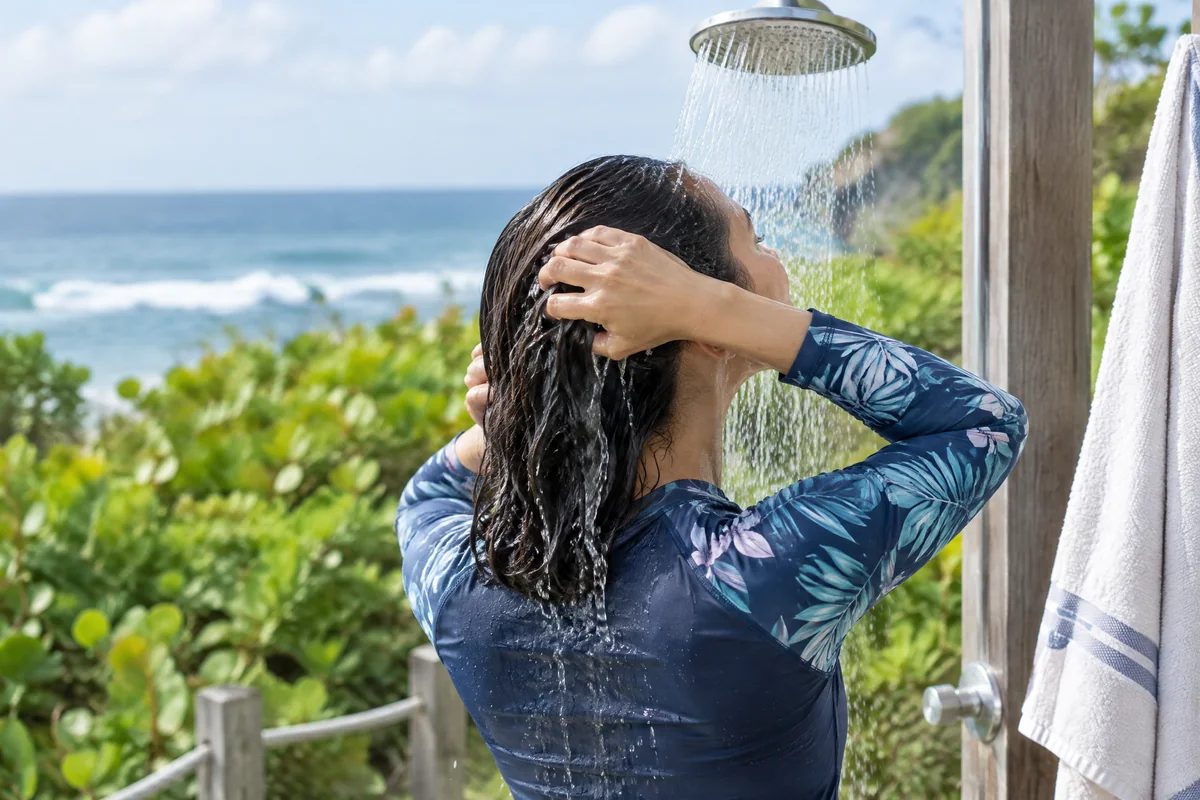
Illustration of rinsing wavy hair with fresh water after swimming
Illustration · a fresh-water rinse as the first step in a predictable post-swim reset.
Guide · 03

Where a wolf cut fits a swim-day routine

A wolf cut is a movement decision, not a promise of effortless texture

A wolf cut usually signals a stronger contrast between shorter upper layers and a longer lower shape. On wavy hair, that can make the natural bend more noticeable. It may suit someone who likes separation and is willing to refresh the crown, reshape the fringe or accept an intentionally irregular finish. It is less suited to a traveller who wants every wet-to-dry transition to settle into one quiet outline without any hands-on work.

Before using the phrase wolf cut, describe your actual swim-day sequence. Say whether you scrunch, brush, diffuse, braid or simply let the hair dry while walking. Ask what the shortest pieces will do after a cap or hood, and whether the cut can be adjusted without losing the movement you want. Vit So Hair Stylist lists one documented address at 252 Hollywood Road, Sheung Wan, Hong Kong; confirm the service details directly.

  • Choose a wolf-style direction when visible separation is part of the goal.
  • Ask how the crown and face-framing pieces behave after being pressed flat.
  • Check whether your daily routine includes enough time to reshape shorter layers.
  • Treat a reference photo as a shape conversation, not a prediction of the final result.
A useful question is: ‘If I only rinse, squeeze and air-dry, which parts will still look intentional?’
Guide · 04

How medium length protects room to adapt

Medium length haircuts for women can balance movement with tying options

Medium length is not one fixed measurement. It can finish near the shoulders, collarbone or another point that changes how the ends touch clothing and equipment. For a traveller, that retained length can create options: a loose tie for a boat ride, a low braid for a walk, or a controlled shape for dinner. The trade-off is that damp hair may take longer to dry and can form a wider triangle if the perimeter is not planned around its natural movement.

When you ask about medium length haircuts for women, bring the constraint that matters most. It might be keeping enough length for a tie, avoiding a heavy wet perimeter, or reducing the number of sections that need separate attention. Ask which length works with your usual parting and how much the ends should connect. Any colour, perm or straightening discussion still needs an individual hair-condition assessment rather than a calendar-based assumption.

  • Mark the shortest length you are willing to keep after shrinkage or wave contraction.
  • Say whether a tie must reach the nape, sit at the crown or stay out of the way.
  • Ask how the perimeter will behave when the ends are damp but the roots are drying.
  • Compare the cut with the clothes and collars you wear after swimming.
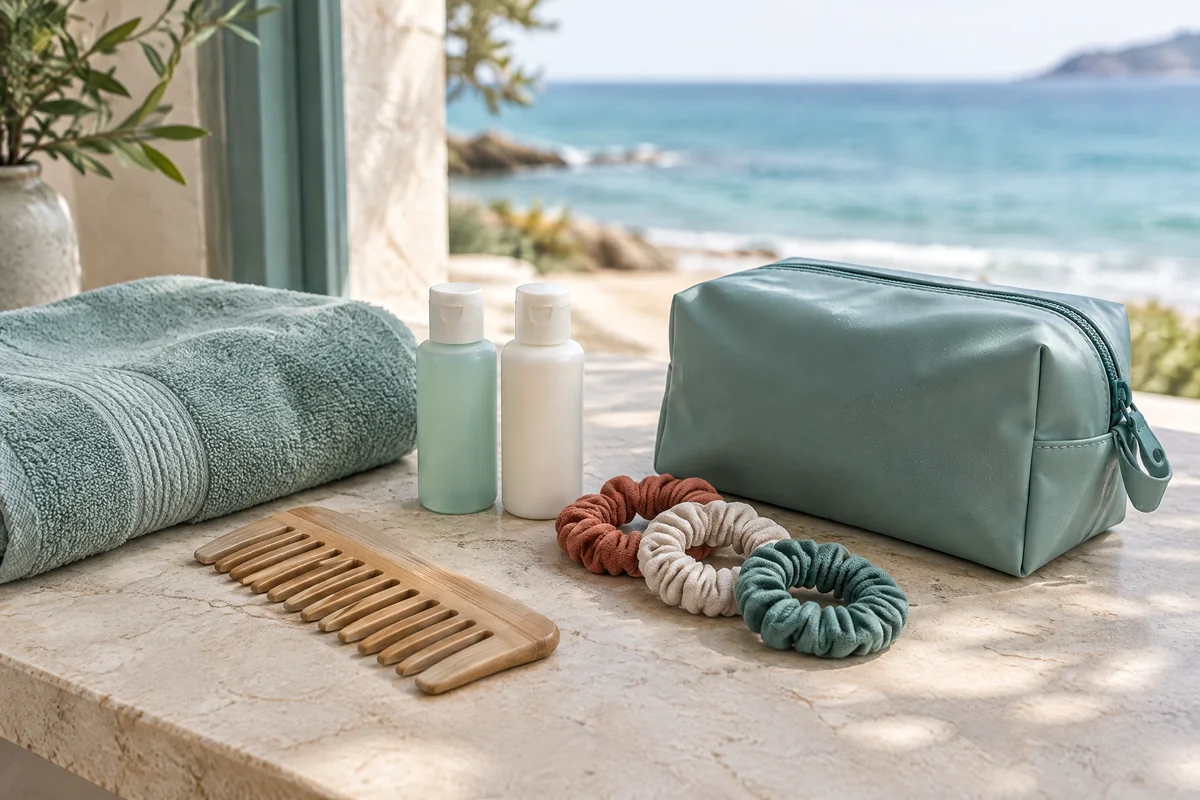
Illustration of a compact coastal hair-care kit for medium-length waves
Illustration · a compact travel kit with simple tools for detangling and drying.
Guide · 05

A naturally wavy haircut needs an honest reset plan

A haircut for naturally wavy hair should match your real products and time

Natural waves vary from one section to another, especially after salt water, pool water, sun and repeated handling. The American Academy of Dermatology notes that UV exposure can contribute to dry, brittle or frizzy hair, and its swim-season guidance recommends rinsing and washing after swimming. [1] Use that as a care baseline, not as a claim that any cut or product cancels environmental effects. A fresh-water rinse, gentle detangling and a suitable conditioner can make the next styling decision more predictable.

If your main question is haircut for naturally wavy hair, explain whether you want the wave to be encouraged, stretched, gathered or left alone. Mention your usual cleanser, conditioner and styling product without assuming a stylist will prescribe a treatment. Ask how much product is expected, whether the shape works without diffusing, and what to do when one side dries faster. This keeps the consultation about your routine rather than an idealised texture.

  • Rinse hair with fresh water after swimming before judging the final shape.
  • Use a wide-tooth comb or fingers where needed, rather than forcing a dry wave into place.
  • Protect the hair and exposed scalp from strong sun with suitable coverage and shade.
  • Ask what to do on a low-effort day when you cannot use a diffuser or several products.

Swipe the table to compare all columns.

Match the haircut conversation to the amount of time available after swimming.
Available timePractical resetUseful cut briefQuestion to ask
Very limitedRinse, squeeze, tie or comb onceAvoid a shape that needs several separate sectionsWhich outline still works with one simple step?
Some timeRinse, condition, detangle and air-dryKeep movement but control the perimeterWhich areas should I leave connected?
Regular styling timeUse product, clips or a diffuserConsider more visible layering if desiredHow should I reshape the crown and face frame?
Variable travel daysPrepare a low-effort and a full-effort versionRetain adaptable length and clear fallback optionsWhat is the simplest acceptable finish?
Guide · 06

Build a repeatable post-swim upkeep routine

Use the next trip to test your process, not to chase a perfect finish

The CDC recommends a one-minute shower before entering a pool to remove much of the dirt, sweat and oils that use up pool chemicals. It also advises checking warnings or closures at oceans, lakes and rivers and drying ears thoroughly after swimming. [2] These are swimming-hygiene points, not haircut promises. For hair upkeep, the practical lesson is to make rinsing and drying part of the activity plan instead of treating them as optional details.

Before your next appointment, write a short before-and-after brief. Include the water type, headwear, how long the hair stays wet, the first place you need to go after swimming, and the styling step you are willing to repeat. If you are comparing seasons, best time to dive in Hong Kong can help you plan the activity context, but it cannot determine whether a particular haircut or chemical service is suitable. Ask the service provider about your current condition and the exact service scope.

  • Pack a rinse plan, a gentle detangling tool and the smallest product routine you will use.
  • Take a quick damp-hair photo after the same kind of activity for future comparison.
  • Review whether the cut saved time, created new reshaping work or needed a different length.
  • Seek medical advice for persistent scalp or skin symptoms instead of treating them as a styling issue.
The best upkeep plan is repeatable on an ordinary swim day. It should not depend on salon-level tools being available at the shore.
Illustration of planning a haircut consultation for naturally wavy hair
Illustration · noting wet movement, retained length and styling time for a consultation.
A sensible next step

Take the question with you

Choose the shape by the wet movement you can live with, the length you need to retain and the time you truly have after swimming. Save wet, damp and dry photos, prepare a simple rinse-and-reset routine, then take those details to a consultation. If chemical services are part of the discussion, ask for an individual hair-condition assessment rather than assuming a trip date sets the answer.

Questions to ask

Common questions

Is a wolf cut easy to manage after swimming?

It depends on the amount of separation, your wave pattern and your available styling time. Shorter upper layers can show more movement after drying. Ask what the cut will do with only a rinse, squeeze and air-dry before choosing that direction.

Should I choose medium length if I swim often?

Medium length can preserve tying and braiding options, but it may also take longer to dry. Decide whether your priority is gathering the hair, reducing wet weight or keeping a particular perimeter. Describe that priority rather than relying on the label alone.

What should I do with wavy hair immediately after a swim?

Rinse with fresh water, detangle gently and use the conditioning routine that suits your hair. The AAD recommends rinsing and washing after swimming, while the CDC provides separate swimming-hygiene advice. Neither source establishes a chemical-service waiting time.

Can a haircut make my hair resistant to salt, chlorine or humidity?

No haircut should be described as a universal shield against those conditions. A cut can change the outline and the amount of work needed, but water, sun and individual hair condition still matter. Ask a qualified service provider about your current hair before any chemical process.

Further reading

Official sources worth checking

Continue exploring

Keep comparing practical questions before you choose a course, activity or preparation step.

Coastal life and hair care · Updated 2026-11-06

Post-swim family hair routine: wash, trim and dry with ease

Plan a post-swim family hair routine with rinse, wash, trim and drying choices. Compare salon questions and check the next step.

post-swim family hair routine
Coastal life and hair care · Updated 2026-11-06

Coastal men's undercut shape guide: compare wet styling

Read the coastal men's undercut shape guide: compare wet outline, side length and curl behaviour, then plan your coastal cut.

coastal men's undercut shape guide

Coastal life and hair care · Updated 2026-11-06

Post-holiday grey root plan: choose coverage and blending

Use this post-holiday grey root plan to compare coverage, blending and root touch-up questions. Read the checklist before contacting a stylist.

post-holiday grey root plan
Your next step

Ask about diving courses or coastal trip planning

Message DiveHarbour on WhatsApp to discuss diving courses or coastal trip planning, along with your experience and preferred dates.

Ask about diving courses or coastal trip planning
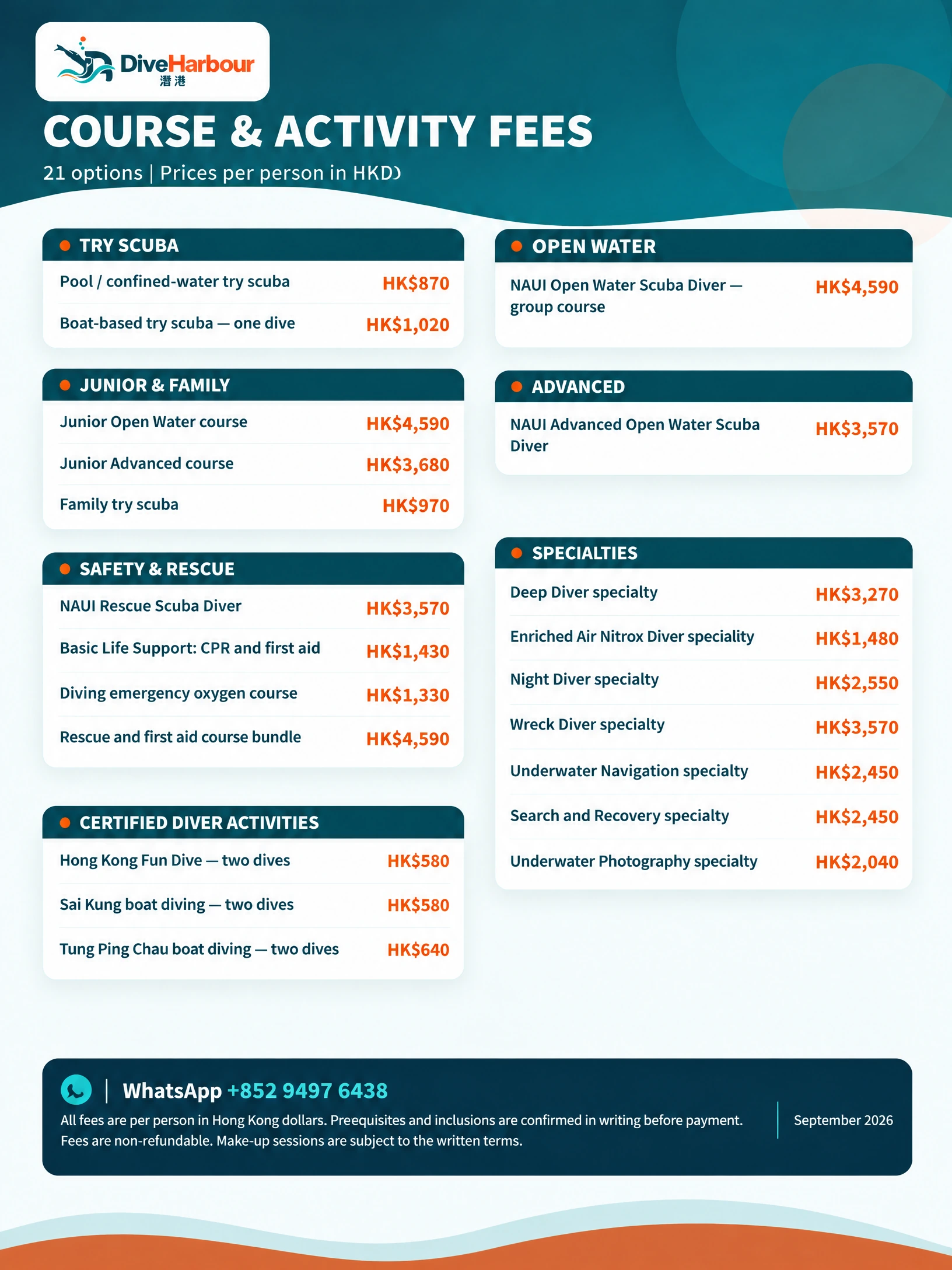
English price list for 21 DiveHarbour courses and activities, with fees per person in Hong Kong dollars
Tap the price list to view it at full size.

Plan your next dive

Course fees, clearly set out

Compare our published course and activity fees before choosing your next step. All prices are per person in Hong Kong dollars.

Before you book, we confirm prerequisites, materials, certification, equipment, venue and boat arrangements in writing. Ask us about fees for courses not listed here.

All fees are non-refundable. Make-up sessions are subject to the written terms.

Read all course fees
DiveHarbour course and activity fees per person in Hong Kong dollars
Course / activityPer person
Pool / confined-water try scubaHK$870
Boat-based try scuba — one diveHK$1,020
NAUI Open Water Scuba Diver — group courseHK$4,590
Junior Open Water courseHK$4,590
Junior Advanced courseHK$3,680
Family try scubaHK$970
NAUI Advanced Open Water Scuba DiverHK$3,570
NAUI Rescue Scuba DiverHK$3,570
Basic Life Support: CPR and first aidHK$1,430
Diving emergency oxygen courseHK$1,330
Rescue and first aid course bundleHK$4,590
Deep Diver specialtyHK$3,270
Enriched Air Nitrox Diver specialtyHK$1,480
Night Diver specialtyHK$2,550
Wreck Diver specialtyHK$3,570
Underwater Navigation specialtyHK$2,450
Search and Recovery specialtyHK$2,450
Underwater Photography specialtyHK$2,040
Hong Kong Fun Dive — two divesHK$580
Sai Kung boat diving — two divesHK$580
Tung Ping Chau boat diving — two divesHK$640