

A useful fact to keep in mind
PADI’s official blog describes 4 open-water dives as part of its Open Water Diver route after the other course requirements are completed.
Check the sourceLearn with clear Mandarin or Chinese-language support
Discuss each step, question and safety point comfortably
Learning to dive is much easier when you can ask a precise question at the moment it matters. Mandarin or Chinese-language support may help you understand buoyancy, mask skills, equipment checks, hand signals and the reasons behind a safety decision. It is not merely a translation of a brochure: good support gives you time to confirm what you heard, repeat a skill explanation in your own words and tell the instructor when something is unclear.
When you enquire, describe the language you prefer for theory, pool or confined-water teaching, open-water briefings and informal questions. “Chinese” can mean Mandarin, Cantonese, written Traditional Chinese, written Simplified Chinese, or a mixture. Say which combination works for you. Also mention whether a buddy or family member will use another language, because the whole group needs a shared plan before entering the water.
Dive terminology can remain in English even when the explanation is in Mandarin. That is normal, particularly for equipment labels, certification documents and internationally recognised hand signals. Ask for a short glossary before class and practise saying critical terms aloud. You should be able to identify your alternate regulator, understand the agreed “OK”, problem and ascent signals, and communicate a stop or change of plan without relying on a phone underwater.
DAN advises divers to agree how they will communicate at depth when language or training barriers may exist. That makes a pre-dive language check a safety habit, not an embarrassment. A clear briefing should cover signals, buddy positioning, what to do if you cannot see each other, and who to alert when you need help. If you are not feeling well, anxious or confused, pause the activity and tell the instructor; language support never replaces a conservative decision to stop.
For a second language option, compare the English-speaking diving instructor Hong Kong route with your preferred Mandarin arrangement. Some learners choose English for international terminology but request Mandarin explanations for difficult concepts. Others want a Chinese-language discussion before deciding and then complete selected materials in English. The right arrangement is the one that lets you understand, respond and ask for clarification throughout the course.
- State your preferred spoken and written language before payment.
- Ask which parts are translated, who provides the explanation, and how questions are handled during practical sessions.
- Agree on underwater signals with every buddy, regardless of the classroom language.

Choosing your Hong Kong scuba course and certification path
Compare beginner training needs before you enquire
Your language preference is only one part of choosing a course. First decide whether you want an introductory experience, a recognised beginner certification, or a refresher after time away from diving. A try-dive can let you discover whether you enjoy breathing underwater, while a certification course involves structured knowledge, confined-water skills and open-water performance. Tell the team honestly about previous dives and certificates; this prevents a language conversation from hiding a more important prerequisite.
For a first certification, ask which agency’s standards apply, what materials are supplied, where practical sessions occur and how additional practice is handled if you need more time. Current arrangements, instructor availability and the teaching language should be confirmed together. A Mandarin explanation does not remove the need to complete the selected agency’s knowledge reviews, skills and dives. Nor should a learner feel pressured to move on before they can demonstrate a skill calmly and safely.
Visitors often have limited time. If you are only in Hong Kong briefly, discuss travel dates, realistic training time and whether an introductory activity is more suitable than trying to compress certification. The page for one-day scuba diving for tourists in Hong Kong can help you frame that conversation. If you live here but work in an international environment, the scuba diving lessons for expats in Hong Kong information may offer a useful comparison of schedules and language expectations.
For learners who already speak Cantonese or want Traditional Chinese support, compare PADI scuba certification in Cantonese Hong Kong rather than assuming Mandarin and Cantonese arrangements are identical. The goal is not to choose the language with the most appealing label; it is to choose the communication setup in which you can understand a briefing, perform a buddy check and explain a problem without hesitation.
In practice, a good enquiry is short but specific: “I am a beginner, prefer spoken Mandarin and Traditional Chinese notes, can swim comfortably, and want a recognised entry-level route. Which theory, pool and open-water sessions are available in that language?” Add your travel window, medical questions for a clinician if relevant, and whether you need equipment. This gives the team enough context to suggest a safe next conversation rather than sending a generic price.
- Choose experience, certification or refresher first; then match the language support.
- Confirm prerequisites and practical components with the selected agency and instructor.
- Do not book around a flight deadline if you may need extra learning or practice time.

What to expect from a Mandarin scuba diving course Hong Kong
Ask about Chinese-language scuba certification Hong Kong arrangements
A typical beginner pathway starts with an orientation and knowledge work, followed by equipment familiarisation and confined-water practice. You may discuss regulator breathing, buoyancy control, mask and fin skills, entries and exits, and buddy procedures. Open-water sessions then apply those skills in a real environment under an agreed plan. The exact sequence, number of sessions and assessment method depend on the agency and course chosen, so request the current outline rather than relying on a social-media summary.
Before each session, expect a briefing that covers the objective, environmental conditions, equipment configuration, signals, limits and what to do if you need to stop. Ask whether this briefing is delivered in Mandarin, Cantonese, English or more than one language. If a translated handout is available but the in-water briefing is not, decide whether that is enough for you. Safety-critical information must be understood at the time, not reconstructed later from a dictionary.
PADI’s official blog describes 4 open-water dives as part of its Open Water Diver route after the other course requirements are completed. This is a useful numeric example of why “online theory plus one short outing” should not be assumed to equal certification; other agencies and course formats may organise requirements differently. The practical point is to ask which agency standard applies and how many supervised sessions your quotation includes.
You can also ask how progress is recorded, whether learning materials are available in your preferred language, and what happens if you need more explanation or a repeat attempt. A supportive instructor should welcome questions and explain the next step without presenting extra practice as failure. Certification is not a race, and language clarity is part of competent decision-making.
For a detailed comparison before messaging, read how to choose an English Cantonese or Mandarin scuba course in Hong Kong. Then send the team your language, experience, dates and goal. Keep written confirmation of the agreed teaching language, practical sessions, included equipment and payment terms.
- Request the current course outline and agency requirements in writing.
- Check whether briefings, skills demonstrations and questions—not only handouts—are accessible to you.
- Treat extra practice as a normal learning option, not a promise of a fixed completion date.

A practical enquiry checklist for Mandarin learners
Get a useful answer before committing
An effective enquiry protects both your time and your safety. Start with your diver profile: beginner, certified diver seeking a refresher, or experienced diver considering a new speciality. Then state your preferred spoken language and writing system. Mention the language of your buddy, any children or family participants, and whether you need an instructor to slow down explanations or provide a glossary. This is more helpful than simply asking, “Do you have Chinese?”
Next ask five concrete questions: Which agency and course level is this? Which sessions are available in Mandarin? Who conducts the in-water briefing? What equipment, transport, certification and practical fees are included? What are the written cancellation and make-up terms? Request a clear answer if any part depends on a particular date, instructor or group. Availability can change, so a past message or online review is not a substitute for current confirmation.
If you have medical concerns, use the agency’s screening information as general guidance and speak with an appropriately qualified clinician when needed. Do not feel obliged to dive because a course has been reserved. A language service should make it easier to disclose discomfort, congestion, anxiety or uncertainty and to stop when necessary.
- Send one complete message with language, experience, dates, goal and buddy details.
- Ask for inclusions and written terms before transferring money.
- Keep the contact’s reply so the agreed language arrangement is not forgotten.

Compare language-support formats and learner fit
Select the arrangement that keeps communication clear
“Chinese-language course” can describe several arrangements, from a fully Mandarin-led class to bilingual support around an otherwise English course. The table below is a conversation tool, not a promise that every format is available on every date. Ask which option is currently staffed and whether the same language support continues from theory through open-water briefings.
Consider your own learning style. A confident English reader may need only Mandarin explanations for physics or safety questions. A complete beginner may prefer one consistent spoken language. A mixed-language group can work well when the instructor deliberately confirms shared signals and checks understanding with each diver. Whatever you choose, the standard for participation is the same: you should understand the plan and be able to communicate a problem.
- Prioritise continuity of safety communication over a marketing label.
- Include your buddy in the language decision and pre-dive signal review.

Planning payment, policies and your next step
Confirm the details before you reserve a place
Once the language and course route are clear, ask for the current total and what it covers. published listings may show prices for particular courses, but a language-support enquiry should not assume that every item—materials, equipment, pool access, boat fees or certification—has the same inclusion. Ask the team to identify any separately arranged item before payment. Do not rely on an informal discount or an old screenshot.
Read the written policy carefully. Course and booking fees are non-refundable unless the stated terms say otherwise. Make-up sessions are available only where the written terms permit them; no date or reschedule is guaranteed. Weather, health, instructor availability and agency requirements can affect plans, so leave sensible flexibility and keep the contact informed rather than attending while unwell.
Your next step is simple: send a WhatsApp enquiry with your preferred Mandarin or Chinese-language arrangement, diver experience, target course, dates and buddy language. Ask for the current outline, price inclusions and policy. A clear answer should help you decide whether the route is right without pressure. If you cannot comfortably explain what will happen in the water, keep asking questions or choose a different arrangement before booking.
- Confirm price inclusions and currency in writing.
- Read the non-refundable and permitted make-up terms before payment.
- Book only when you can describe the teaching language and practical plan clearly.
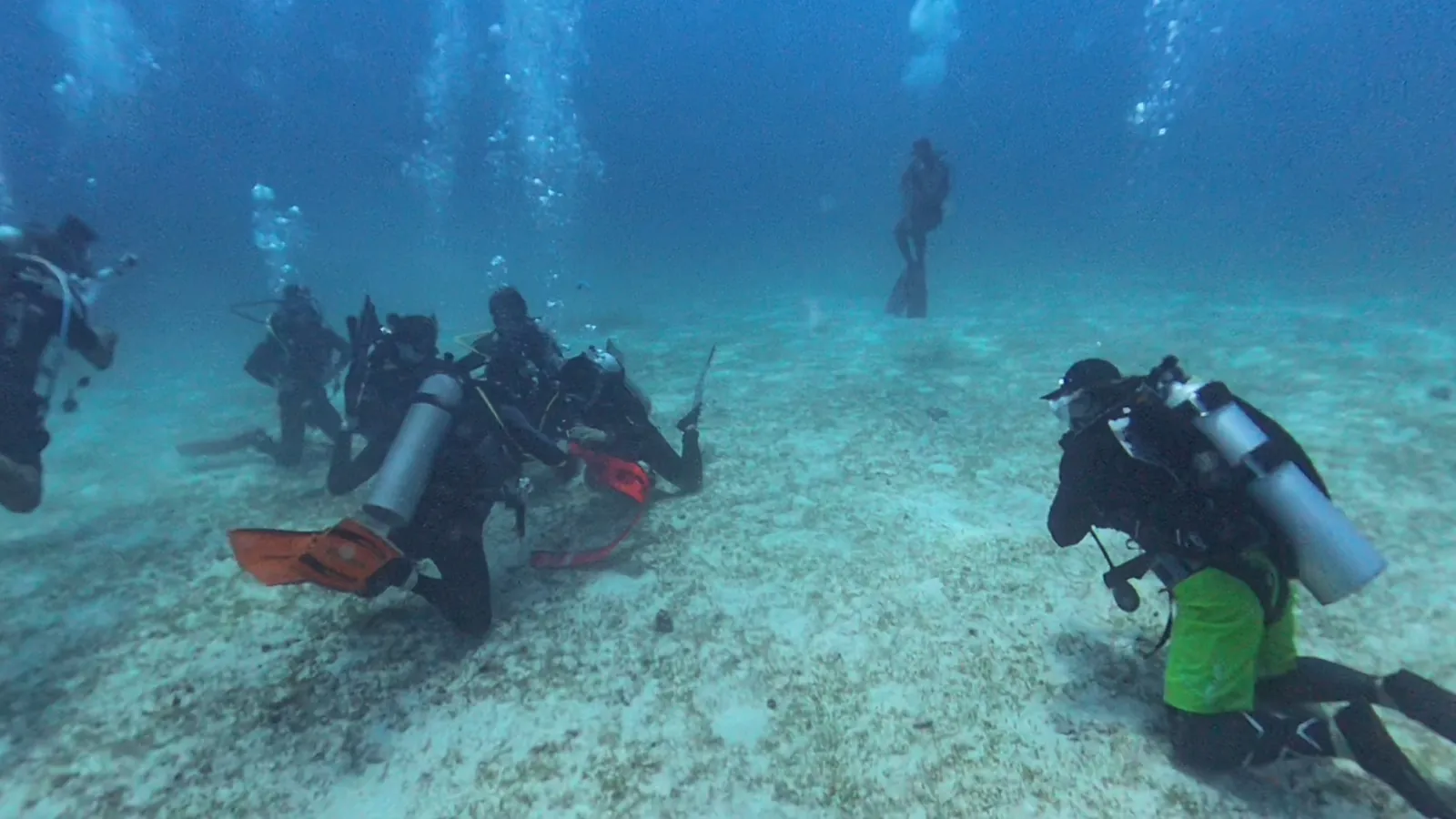
Language-support formats to discuss with DiveHarbour
| Format | Best for | Check before booking |
|---|---|---|
| Mandarin-led teaching | Learners who want consistent spoken explanations | Whether all theory, pool and open-water briefings are in Mandarin |
| Bilingual support | Learners comfortable with English terminology but wanting Chinese clarification | Who translates questions and how safety-critical instructions are confirmed |
| English course with Mandarin consultation | Confident English learners with specific difficult topics | Whether an instructor can support your buddy briefing and in-water communication |
| Chinese notes plus mixed-language group | Groups with different reading or speaking preferences | Shared hand signals, briefing language and individual understanding checks |
Mandarin and Chinese-language scuba courses in Hong Kong — common questions
Can I ask about scuba training in Mandarin or Chinese?Toggle answer
Yes. Tell DiveHarbour which language you prefer for explanations and questions, along with your experience and course goal. The team can clarify what language support is available for the relevant theory, skills and safety discussions before you decide.
Does Chinese-language support change the certification requirements?Toggle answer
Language support does not replace the course standards or practical training requirements of the selected certification route. Ask for the teaching-language arrangement and full course process in advance, so you understand what must be completed and can communicate safely throughout training.
Will every part of a Mandarin course be fully translated?Toggle answer
Not necessarily. Materials, classroom explanations, pool teaching and open-water briefings may have different arrangements. Ask specifically who will explain each safety-critical stage and whether your buddy can follow the same signals and plan.
Can I cancel or make up a session if my plans change?Toggle answer
Fees are non-refundable unless the written booking terms provide an exception. Make-up sessions are available only where those written terms permit them, and a new date is not guaranteed. Confirm the policy before payment and contact the team as soon as circumstances change.
What should I include in my first enquiry?Toggle answer
Include your spoken and written language preference, experience or certification, target course, dates, buddy language, equipment needs and any general questions for a clinician. Ask for the current course outline, price inclusions and policy in writing.
Take the question with you
Clear language is part of good dive preparation. Share your Mandarin or Chinese-language preference early, confirm how briefings and practical questions will be handled, and choose a course route that matches your experience rather than your travel deadline. Once the agency, sessions, inclusions and written policies are clear, message DiveHarbour on WhatsApp for the current arrangement and take the next step with confidence.
Sources worth checking
- DAN Alert Diver: Questions To Ask a New Dive Buddy
DAN recommends agreeing on communication before diving when language or training barriers may exist, and discussing signals, dive plans and buddy procedures.
- PADI Open Water Diver Scuba Diving Certification
PADI identifies Open Water Diver as an entry-level scuba certification course; course requirements and current arrangements should be confirmed with the selected provider.
- PADI Blog: How to Become a Scuba Diver
PADI states that after completing 4 open-water dives and the other course requirements, a learner becomes a certified PADI diver.
Useful next reads for your plan
If you are still comparing routes, these related pages give you practical questions to bring into your next conversation with an instructor.
Put your plan into practice
Useful planning guides
Dive course communication guide for Hong Kong visitors
Use this dive course communication guide worksheet to compare practical options, check key decision points, and confirm current details with DiveHarbour.
dive course communication guide
